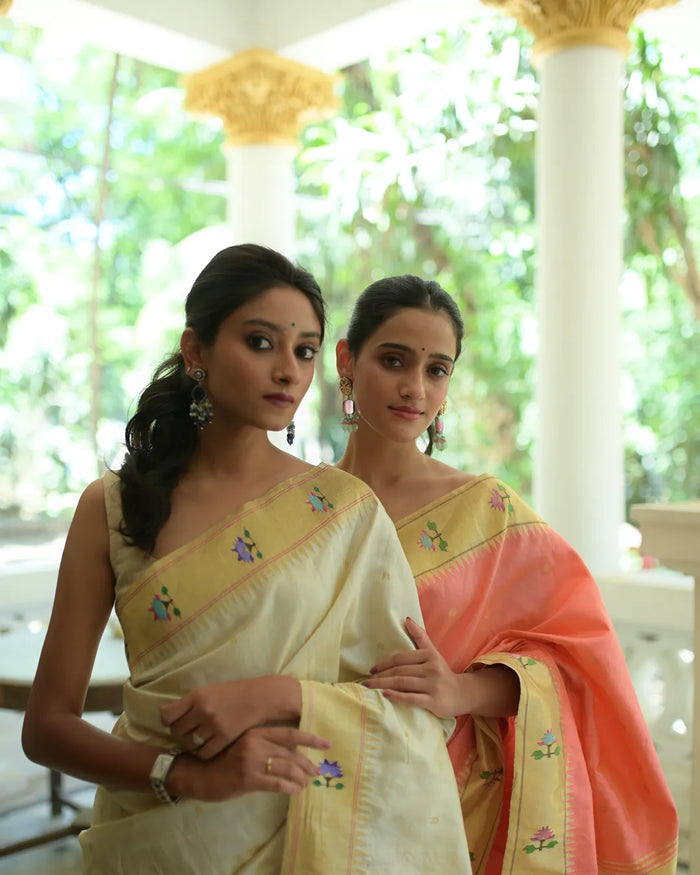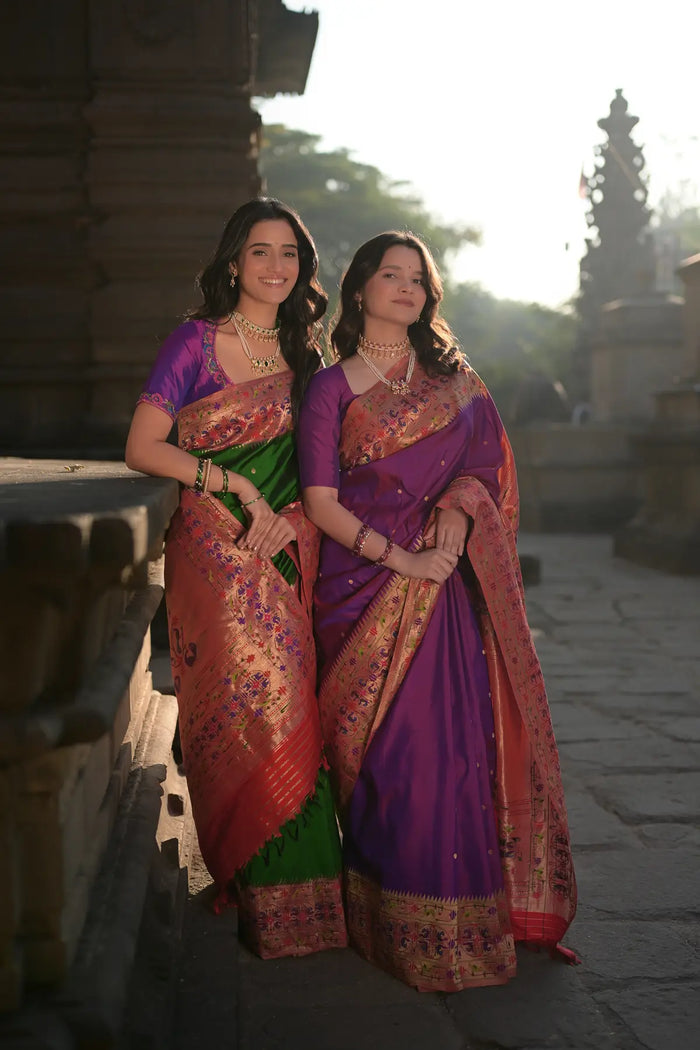
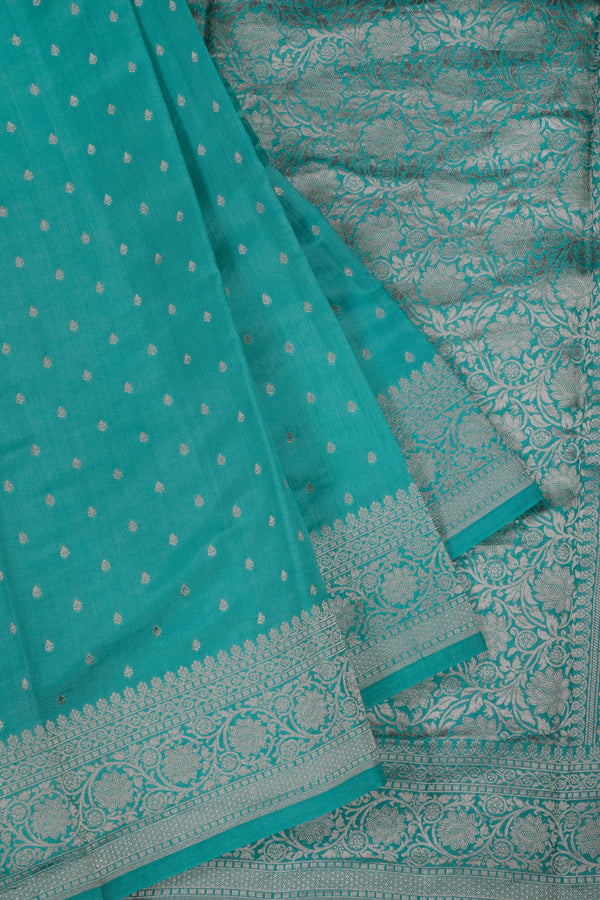
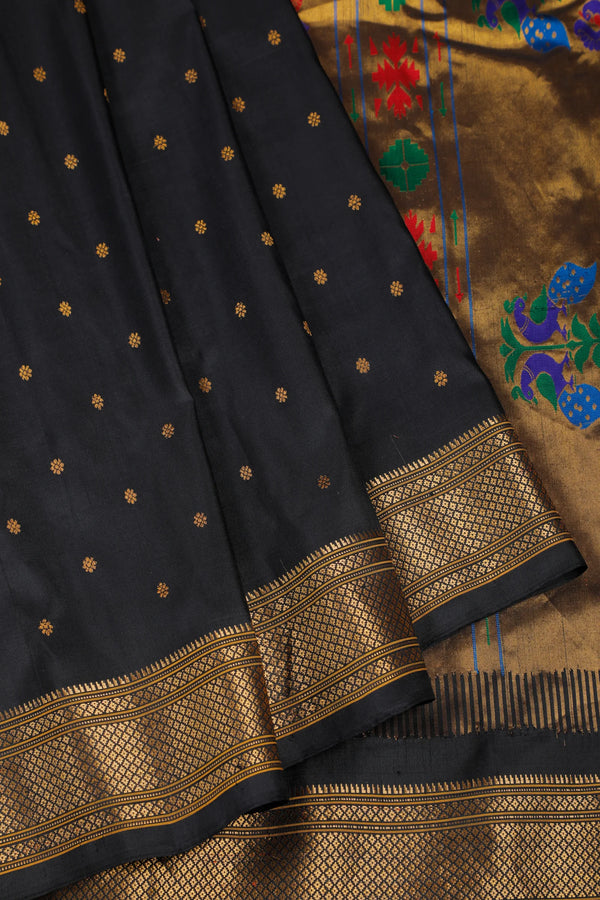
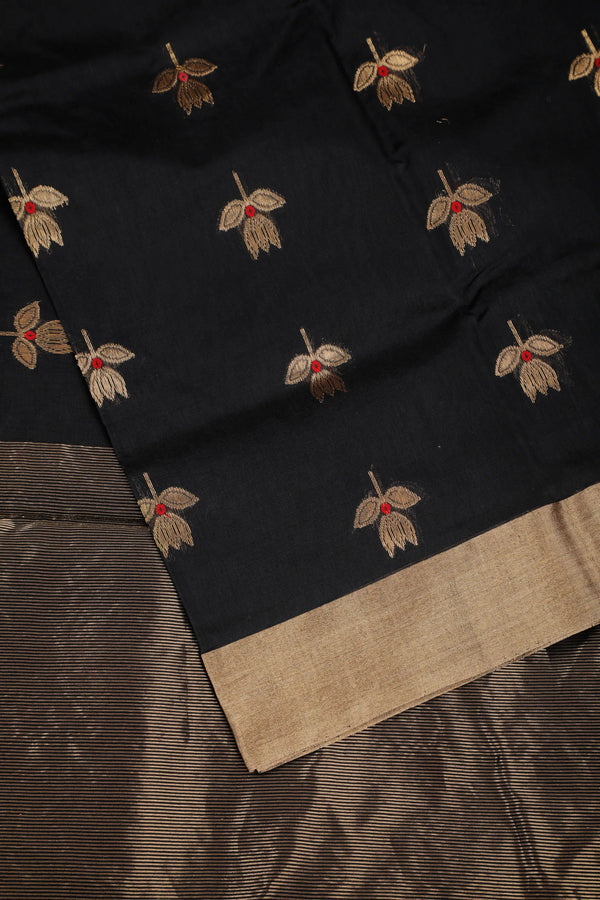
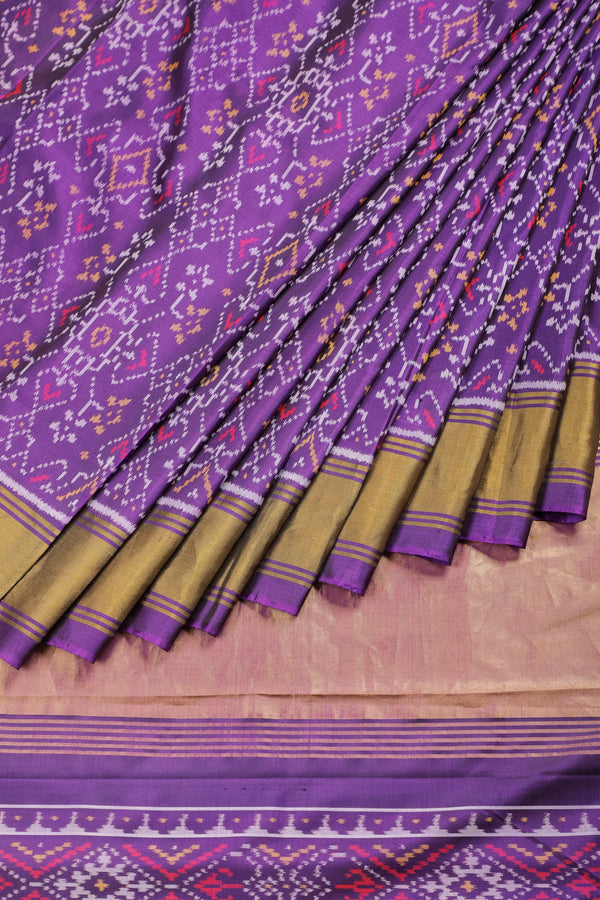
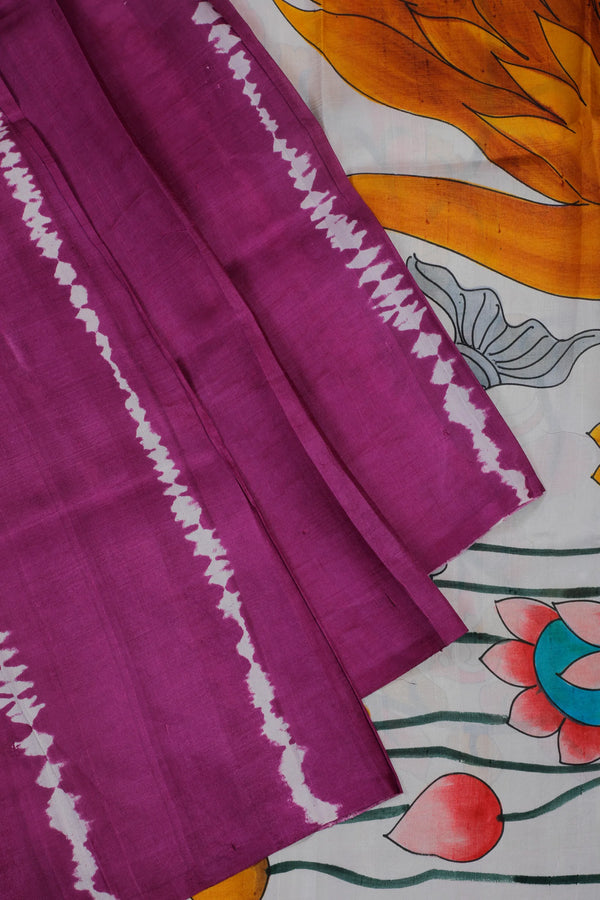
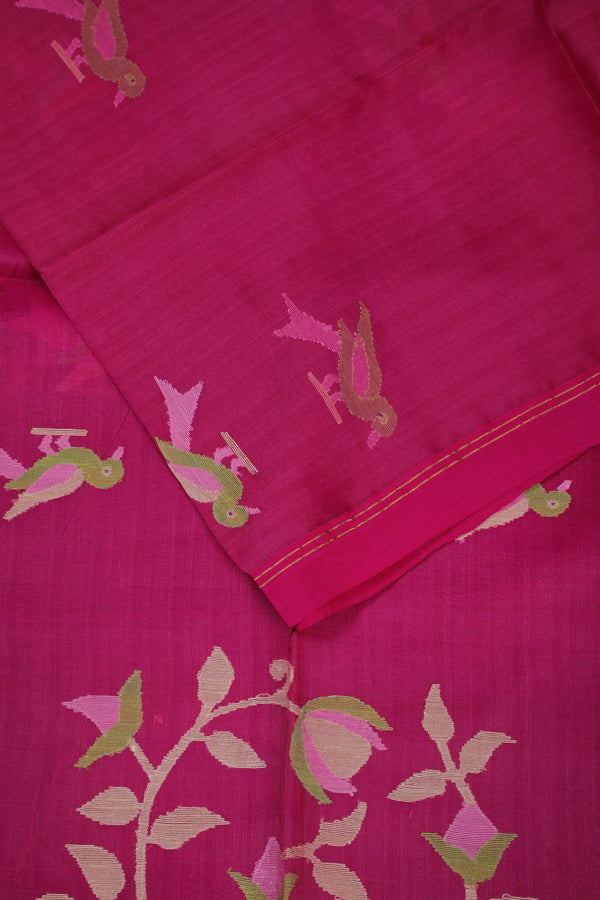
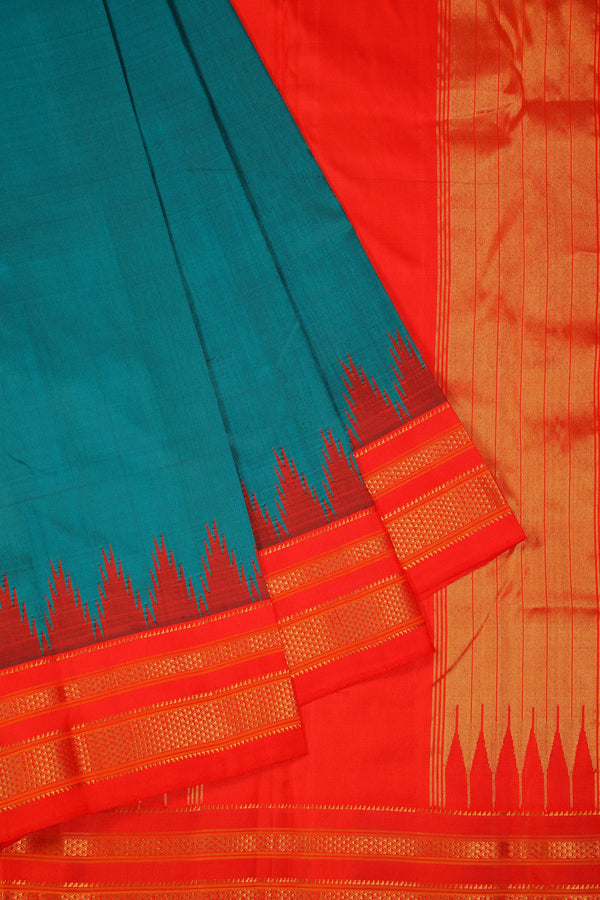
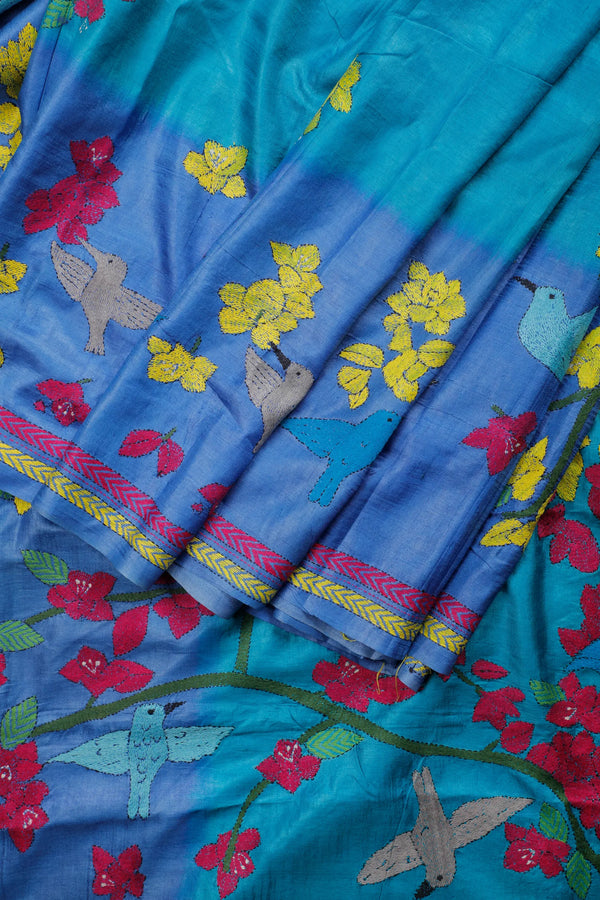


In a market flooded with look-alikes, knowing whether a saree is genuinely handwoven can be the difference between an heirloom and an imitation. Powerloom sarees can mimic the patterns of handloom at a glance, but the two are worlds apart in craft, character and value. Here is how to tell them apart — and why it matters.
What is the difference?
A handloom saree is woven entirely by hand on a manual loom, each thread placed by a skilled artisan. A powerloom saree is produced on an electrically powered machine that weaves many metres quickly and identically. One is a slow, human craft; the other is fast, mechanical production. Both have their place — but only one carries the soul of its maker.
Look at the reverse
Turn the saree over. On a handloom piece, the back closely mirrors the front, with threads carried neatly across and small, honest irregularities throughout. Powerloom fabric often has a flatter, more uniform reverse, sometimes with floating threads trimmed away by machine. The back tells the truth the front tries to hide.
Feel the weight and the weave
Handloom fabric has a distinct, living quality — it breathes, drapes softly, and feels subtly uneven to the fingertips because every thread was placed by hand. Powerloom cloth tends to feel flatter, stiffer and perfectly even. Hold both, and your hands will often know before your eyes do.
Embrace the imperfections
This is the most reliable sign of all: the tiny irregularities. A slight variation in the weave, a motif that sits a hair differently, a gentle shift in colour along the length — these are the fingerprints of the human hand. A machine produces flawless repetition; a weaver produces character. What looks like an "imperfection" is, in fact, a certificate of authenticity.
Examine the zari and the motifs
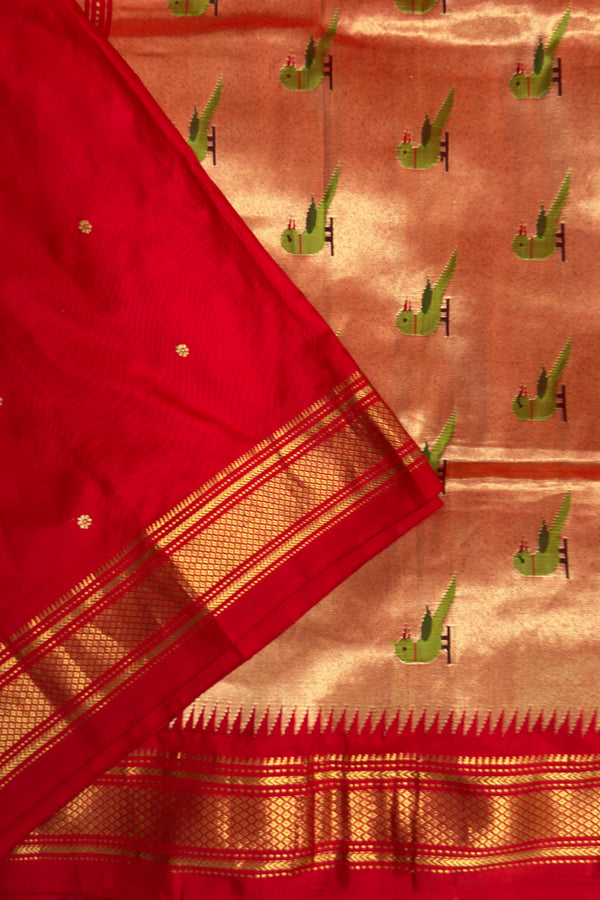
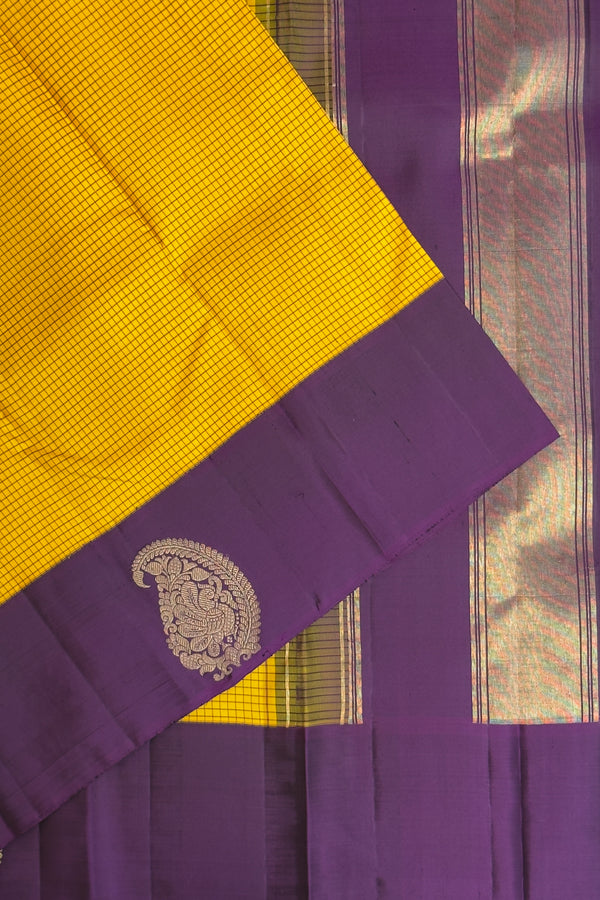
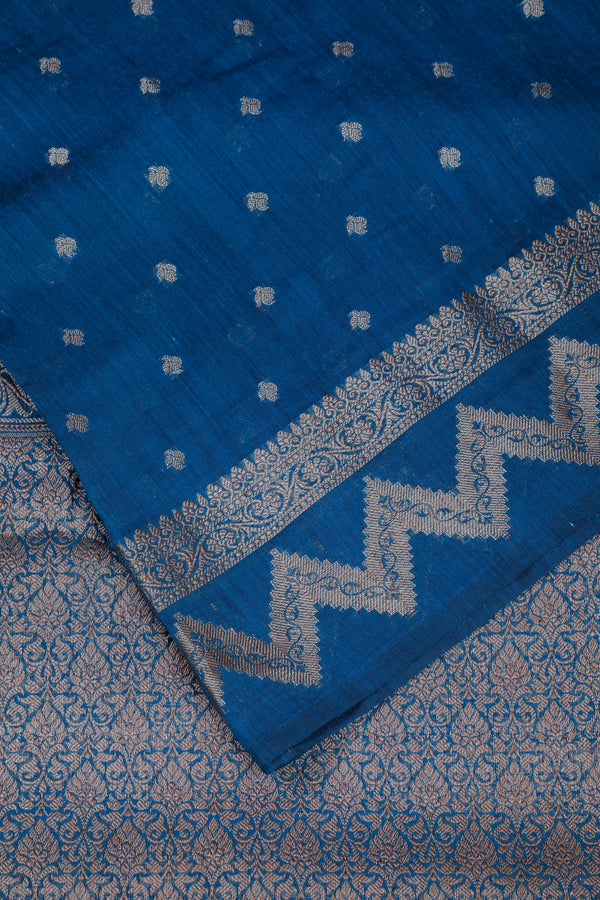
In fine handloom, the zari and motifs are woven into the fabric, integral to its structure and often interlocked by hand. On many powerloom or printed pieces, patterns can look pasted on, sitting only on the surface. Run a finger over a border — true woven work has a depth you can feel. The gold brocade of a Benarasi or the airy weave of a Chanderi are perfect examples of this depth.


Why it matters
Choosing handloom is not only about quality. Every handwoven saree supports a weaver, a family and a tradition passed down for generations across India. A powerloom can copy a pattern, but it cannot copy the livelihoods, the heritage or the human story behind the cloth.
At Saudamini Handlooms, the vast majority of our saree collection is authentic handloom, and the origin of each piece is listed on its product page. We also offer a carefully curated range of affordable powerloom sarees — always honestly labelled — so you can choose with complete clarity.