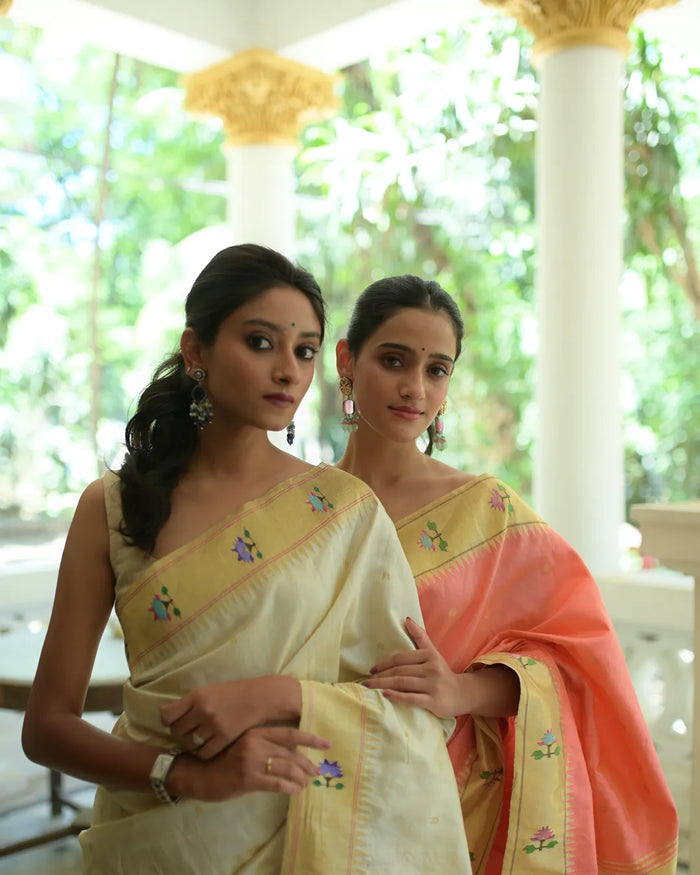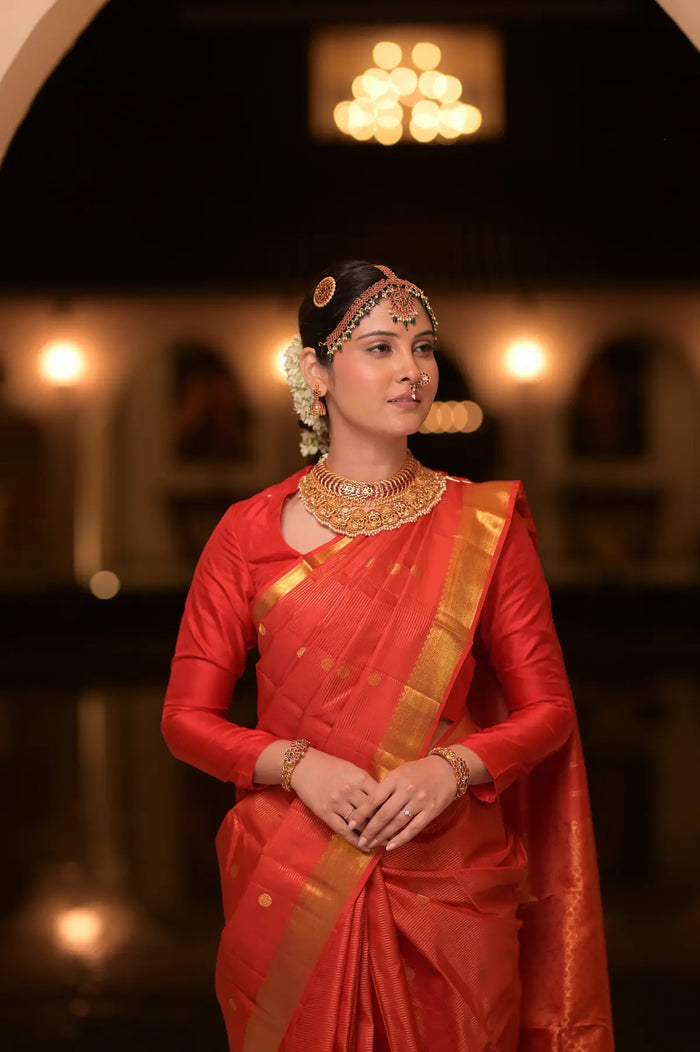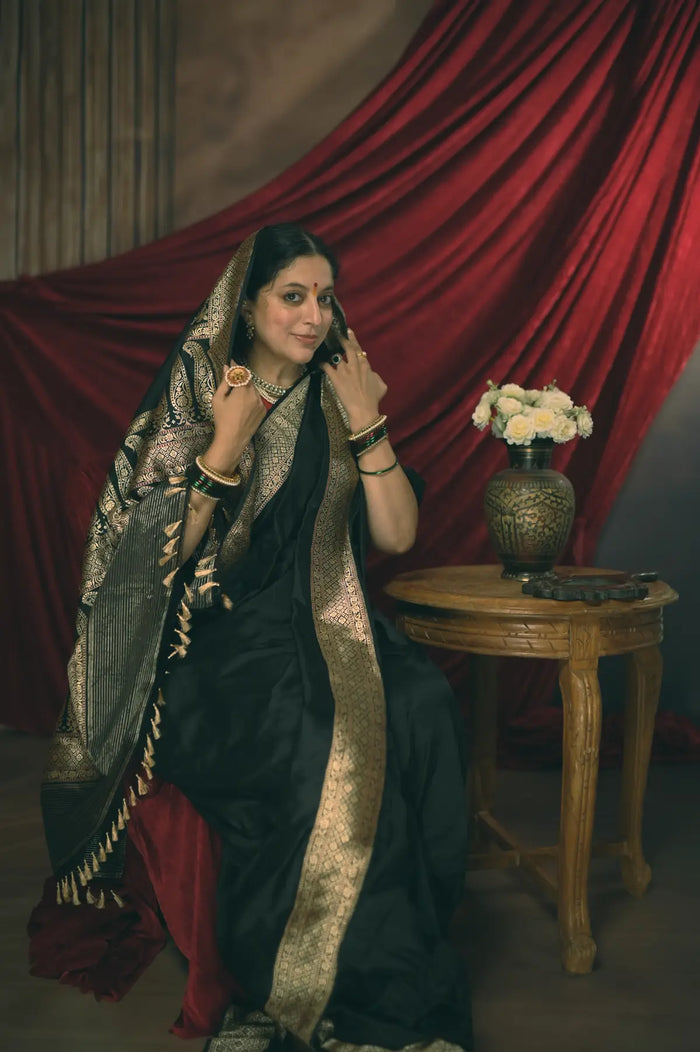
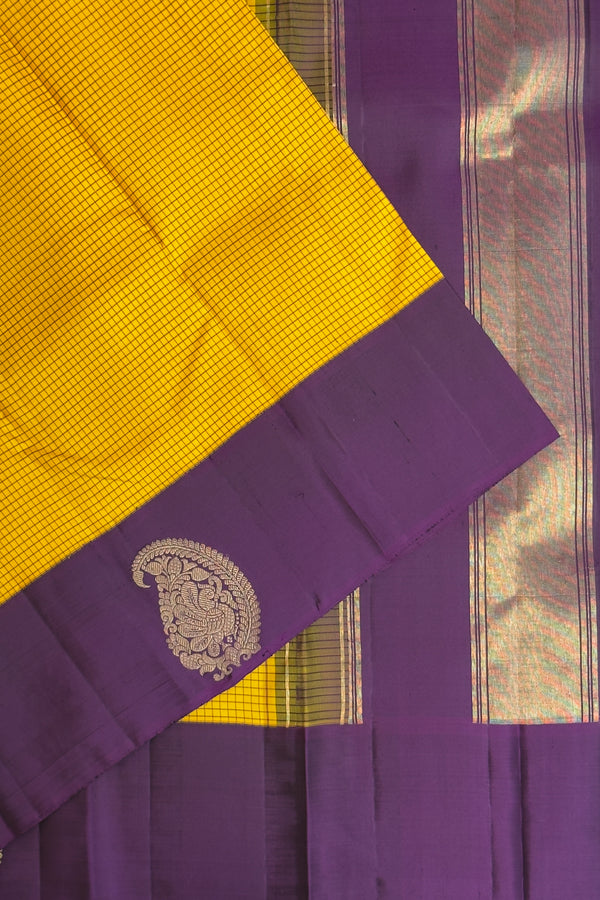
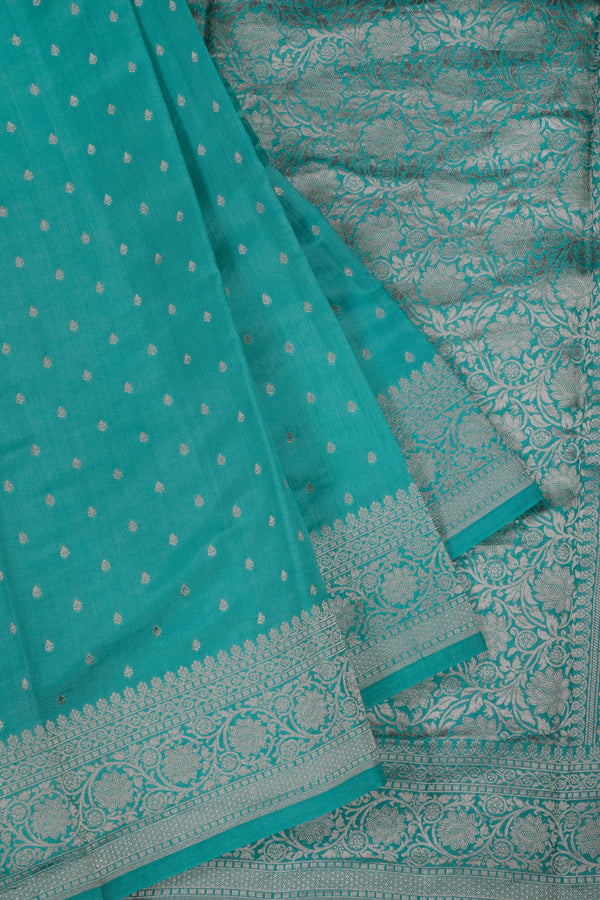
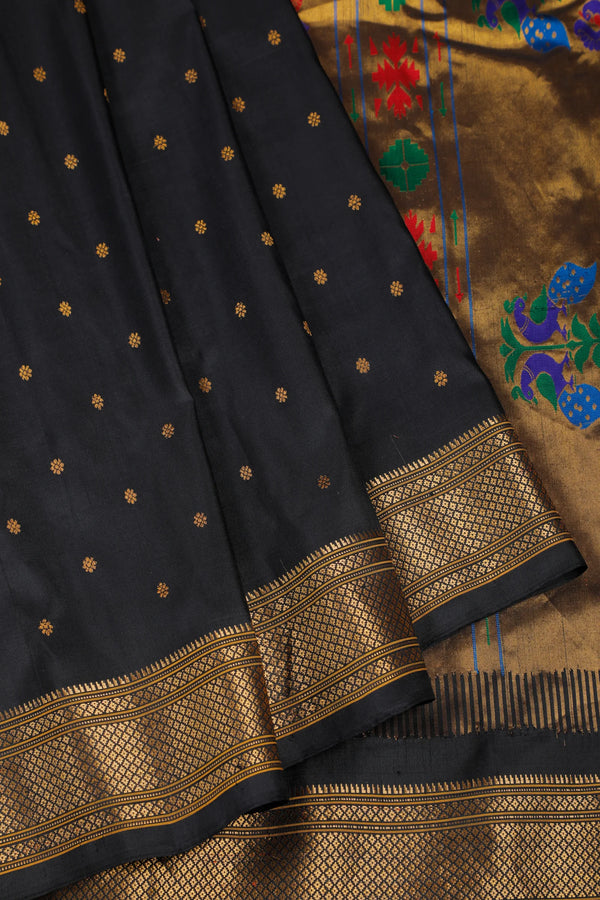
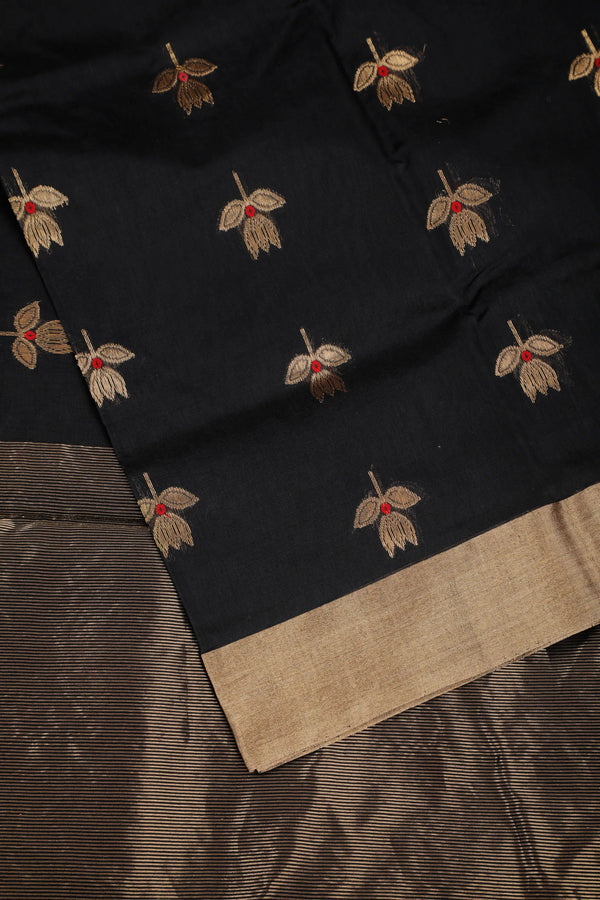
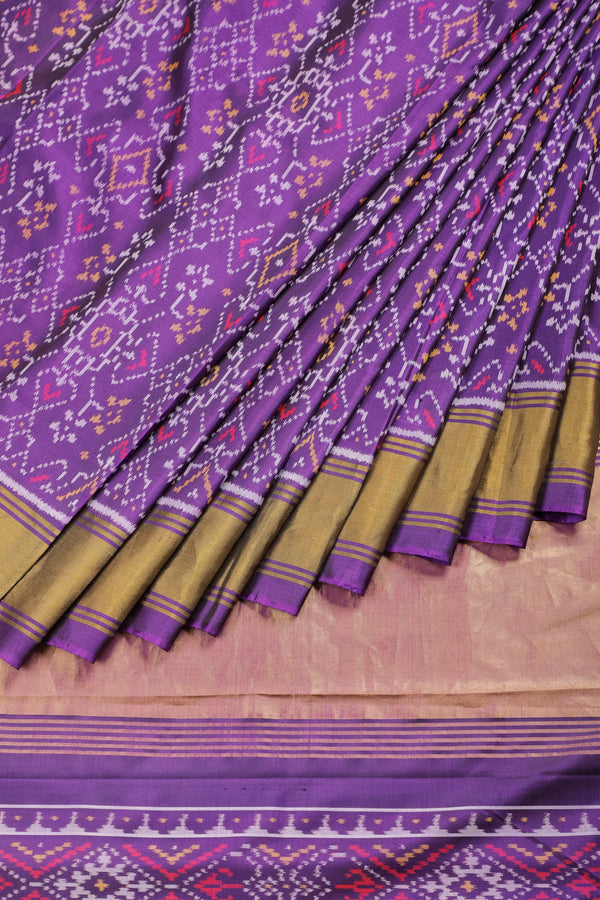
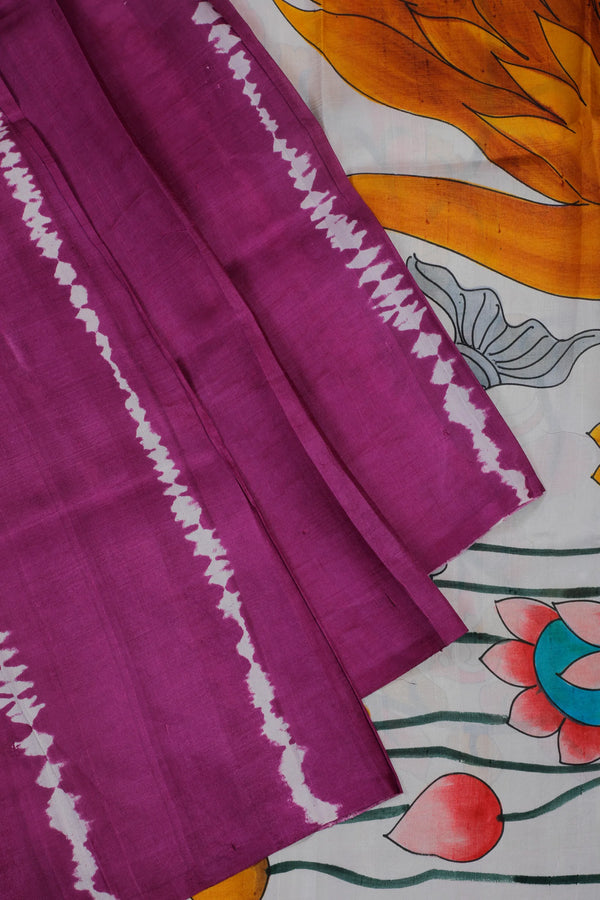
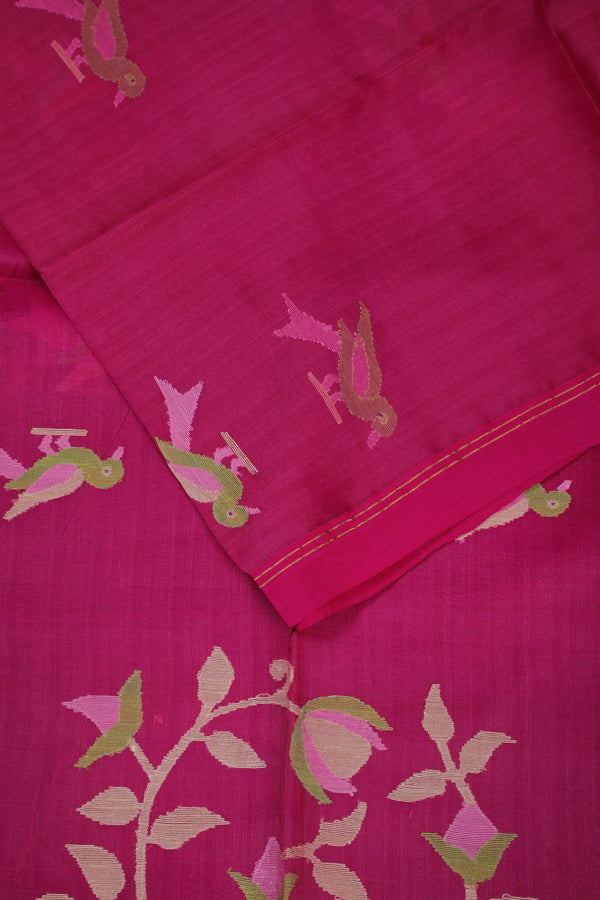
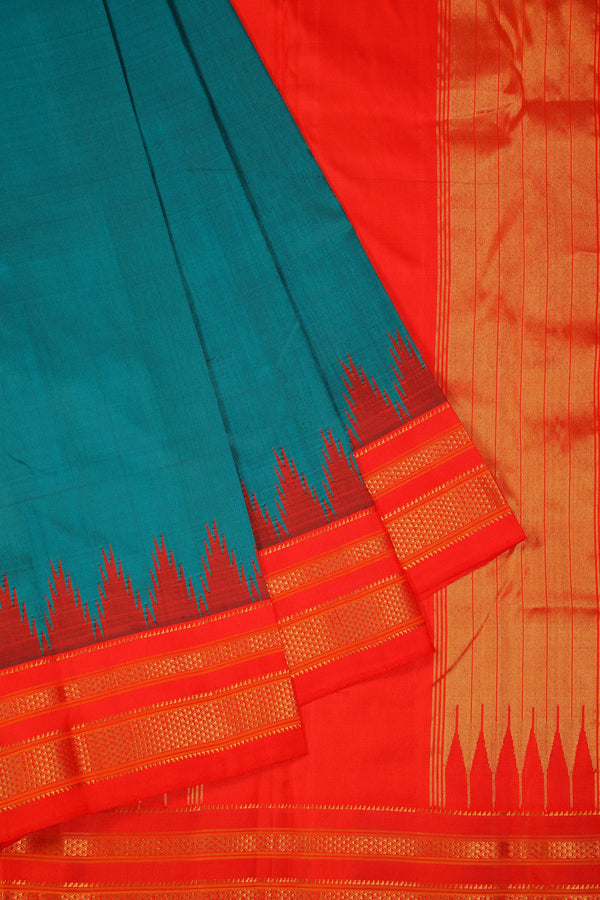


Among the many handwoven treasures of India, few command the reverence of the Paithani. Often called the queen of Maharashtra's looms, this pure-silk saree has been woven for over two thousand years in the town of Paithan, on the banks of the Godavari. To own a Paithani is to own a piece of living history — a textile once reserved for royalty, still made today exactly as it was centuries ago: entirely by hand.
A heritage woven over centuries
The Paithani rose to fame under the patronage of the Satavahana dynasty and, later, the Peshwas, who prized its luminous silk and real-gold zari. It was a saree of courts and queens, once traded for its weight in gold. That legacy endures: a true Paithani is still considered an heirloom, lovingly passed from mother to daughter across generations.
Silk, and the gleam of zari
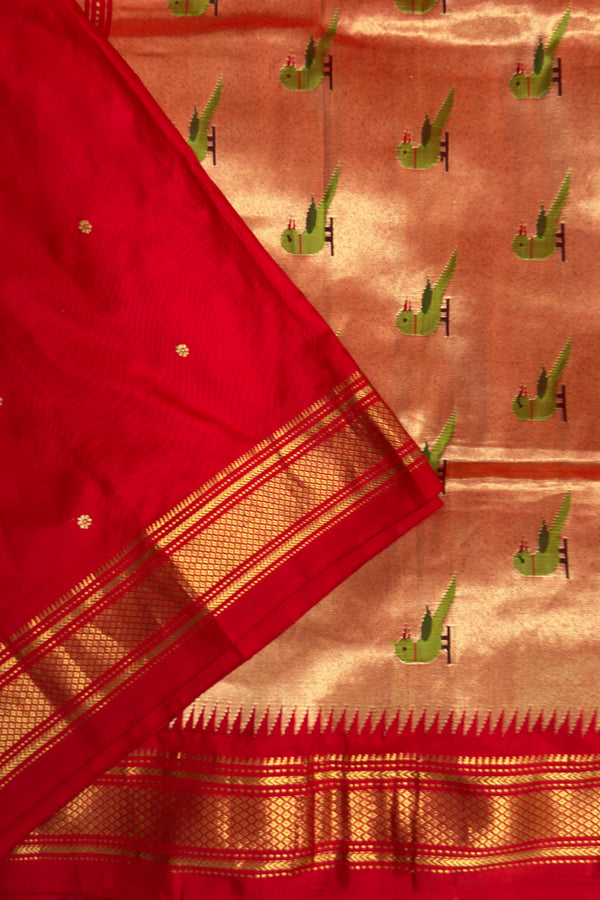
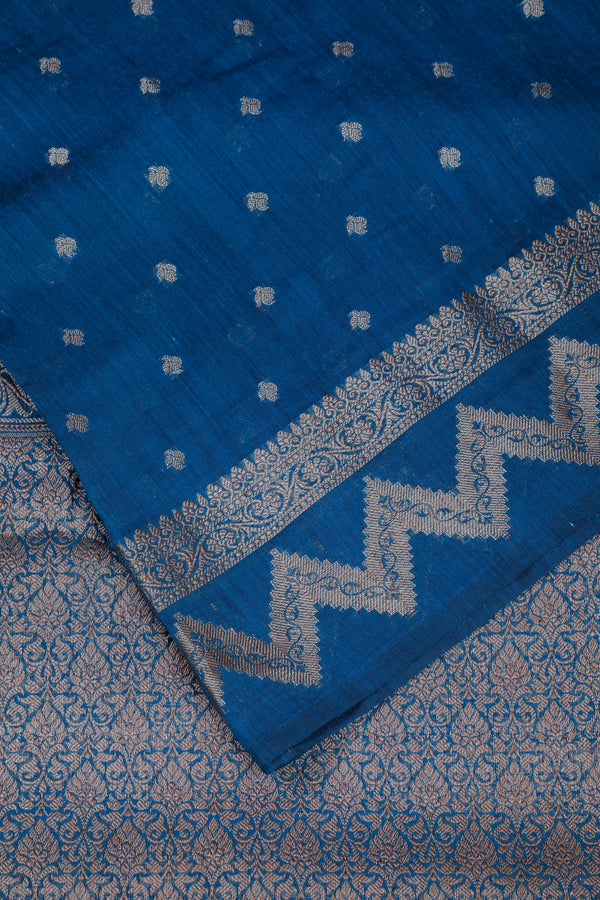
Every Paithani begins with the finest mulberry silk, chosen for its sheen and strength. The borders and pallu are woven with zari — traditionally pure silver dipped in gold. It is this interplay of soft silk and precious metal that gives the Paithani its unmistakable glow, shifting colour as it catches the light. Because the zari is woven in rather than printed on, the brilliance never fades or peels.


The pit loom and the patient hand
There are no shortcuts. A Paithani is woven on a traditional pit loom, where the weaver sits with their legs in a pit below, working the treadles by foot while the hands guide every thread. The signature pallu and borders are created using a painstaking tapestry technique, in which the weft is interlocked by hand, colour by colour, with no mechanical assistance whatsoever. A single saree can take anywhere from two months to well over a year, depending on its intricacy.
Motifs that tell a story
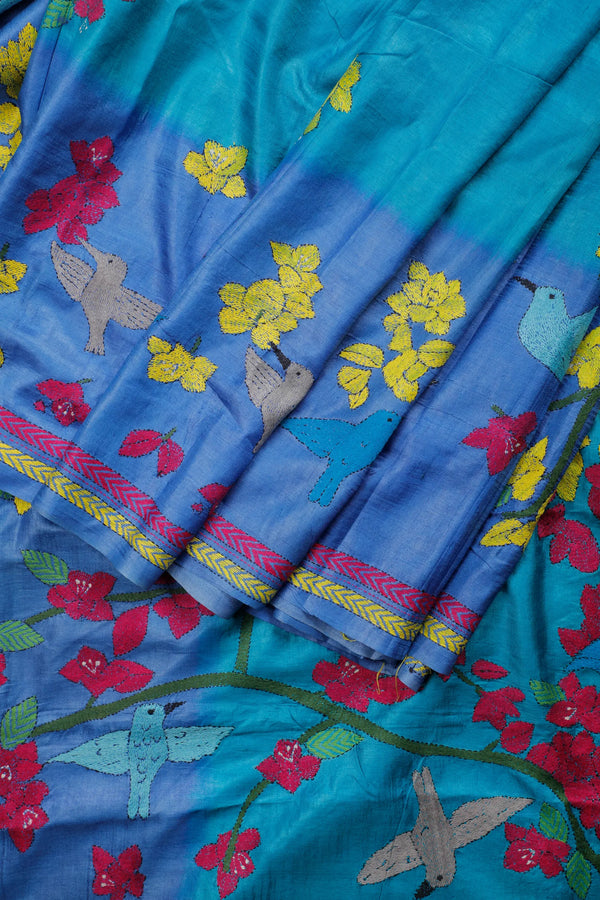
The Paithani is famous for its motifs, each carrying its own meaning. The dancing peacock (mor) is the most beloved, alongside the lotus (kamal), the parrot (muniya), the coconut and gently creeping vines. The pallu often blooms into an elaborate garden of these forms, while the body may be scattered with delicate buttis. Because every motif is built thread by thread, no two Paithanis are ever truly identical.
The revival
As powerlooms spread, the painstaking craft of the Paithani came under threat, and many traditional designs and natural-dye recipes were nearly lost. Today, a quiet revival is under way — weavers returning to vintage patterns, mineral and vegetable dyes, and the slow, honest techniques of their ancestors. When you choose a revival Paithani, you help keep that precious knowledge alive.
Why it is treasured
A Paithani is far more than a saree. It is months of a master weaver's life, the memory of an ancient town, and a craft that has survived empires. Drape one, and you carry all of that with you. Discover our handwoven Paithani collection, each piece sourced directly from the artisans who keep this extraordinary tradition alive.